
A lot of people land on DigitalConnectMag because they’re trying to confirm one simple thing: what the site really is, and whether it’s worth their time. Some type digitalconnectmag.com directly. Some search a shorthand like digitalconnectmag com after seeing the name in a thread. Others click a shared URL from a post and end up on the secure homepage athttps://www.digitalconnectmag.com/.
No matter how you arrive, the next questions tend to be the same. What does it publish most? Is it tech news, business advice, marketing tips, or crypto commentary? Who is it written for? And when you read a page, how do you tell the difference between a straight guide and a piece that leans promotional?
This guide is built to answer those questions in plain language. One quick clarity statement: this is an independent page. We do not run DigitalConnectMag, we do not publish on its behalf, and we do not control what appears on it.

Why people look up DigitalConnectMag in the first place
Digitalconnectmag. Com is one of those sites that gets discovered sideways. Readers do not always “choose” it as their favorite magazine. They often arrive through a search for a topic like VPNs, IP addresses, password tools, marketing ideas, workplace themes, or crypto safety. The site name becomes familiar after the click.
That pattern matters because it tells you how DigitalConnectMag works as a reading destination. It’s less like a single-topic blog with one clear mission, and more like a mixed online magazine where several subjects share space. If you expect one tight focus, the variety can feel confusing. If you treat it as a browsing magazine with an archive, it makes more sense.

Our Posts

DigitalConnectMag and FintechZoom: Where to Track Crypto, AI, and Tech News

DigitalConnectMag Covers Business: What to Publish and How to Structure It

Crypto Security: Beginner Safety Checklist to Avoid Common Mistakes

Small Businesses: Smart Digital Moves That Improve Sales and Efficiency

Online Business: How to Start, Grow, and Keep It Running Smoothly

Business Advice: What to Trust Online and How to Avoid Bad Guidance
What kind of site DigitalConnectMag is
DigitalConnectMag reads like a broad tech-and-business magazine with multiple “lanes” running at the same time. You’ll see content that feels like a consumer guide, content that feels like small business reading, and content that touches markets and crypto.
The site is built for readers who want quick clarity. The writing usually aims for plain explanations rather than academic depth. That makes it easy to get started, and it means the level of detail can change from post to post.
What DigitalConnectMag covers most often
The cleanest way to understand the site is to look at the repeated themes that show up across the archive. You’ll see overlap between these themes, since many posts blend two or three at once.
Tech, tools, and everyday digital life
A large chunk of DigitalConnectMag content lives in the “tech for regular life” zone. That includes apps, common device questions, software choices, simple troubleshooting, and how people use online services day to day.
This lane attracts readers who want quick explanations without a lot of jargon. It’s the kind of content people read when they’re setting up a new laptop, switching phones, choosing a service, or trying to understand a feature they keep seeing on screens.
Privacy, security, and account habits
Another steady lane is privacy and account safety content. Topics like VPNs, proxies, Tor, IP addresses, password behavior, and account protection pull consistent search traffic because the questions never stop coming.
This is the part of the site that gets shared the most in practical conversations. People want to know what a tool does, what problem it solves, and what tradeoffs it brings. When a post answers those three things clearly, it tends to perform well.
Marketing, content, and social media reading
Digital marketing posts show up often, usually aimed at small teams and working professionals rather than enterprise executives. The tone tends to be practical: what to post, what to focus on, what tools help, and how online attention shifts.
This lane is useful when you treat it like a “starting point” library. A marketer can scan ideas, then take the topic deeper with specialist sources when needed.
Small business and online work themes
Some posts lean into running a business online, choosing tools, managing time, and handling workplace realities. Content in this lane can include HR-style topics (reward ideas, workplace habits, team management) alongside software and marketing posts.
This is one reason readers sometimes feel the site “covers everything.” It doesn’t stay inside a narrow tech-only box. It mixes modern work topics with digital tools, since those things overlap for small teams.
Finance, fintech, and crypto coverage
DigitalConnectMag has posts that touch markets, crypto, and fintech themes. Some are educational, some are commentary-style, and some look like roundup reading. People often discover these posts through search, then move into adjacent tech and business content.
This lane is worth reading with a calm mindset. Market topics move fast, and the real value comes from cross-reading and confirming claims before acting on them.

Who DigitalConnectMag seems written for
DigitalConnectMag attracts a mixed audience. That’s a strength, and it shapes the writing style.
It fits readers who want explanations that feel friendly and direct, without heavy technical framing. It fits small business owners who want tool suggestions and simple marketing guidance. It fits marketers and creators who keep one eye on social platforms and one eye on practical tactics. It fits finance-curious readers who browse crypto talk, then drift into general tech reading.
This mix creates a wide surface area. Some posts will feel spot-on for you. Some will feel general. Treat it like a magazine rack rather than a textbook.
The writing styles you’ll see across the site
DigitalConnectMag is not one format repeated endlessly. It mixes a few common online-magazine formats, and recognizing them helps you read faster.
Explainers that define a term and clear confusion
A classic format is the explainer: define the term, show where it appears in real life, explain why it matters, then give a few practical tips. This works well for IP addresses, privacy terms, and simple tool categories.
When an explainer is strong, it answers the question a reader actually asked, then adds one or two “next questions” the reader didn’t think to ask yet.
Decision guides that help you choose between options
Another format is the “choose between” guide, common with VPNs, password tools, and software stacks. These posts usually succeed when they state tradeoffs clearly. Speed, cost, trust, ease of setup, and privacy limits matter more than hype.
When a decision guide is weak, it reads like a list of names without showing how to pick.
Workplace and business lifestyle posts
The “rewarding employees” style post fits this lane: workplace ideas, team habits, management topics, and broader business behavior. These posts tend to do well because they speak to problems people deal with daily, even when they came to the site for tech.
This lane can be useful, but it’s where readers should stay alert for overly generic advice. Good workplace writing has context and realistic constraints. Weak workplace writing sounds like a motivational poster.
Market and crypto commentary posts
Market posts can range from educational to reactive. The best ones explain terms and risks clearly. The weaker ones lean on excitement, fear, or simple predictions.
If you read this lane, treat it like one voice in a larger conversation, not a single authority.

How to judge a post before you treat it as reliable
Digital magazines often have mixed business models. Some posts are purely editorial. Some posts come from guest contributors. Some posts exist because a product or service wants attention. Those realities show up across the web, not just on DigitalConnectMag.
You don’t need special tools to read smart. You need a quick filter.
Start with intent. Is the post trying to explain a concept, compare options, review a product, or push a choice?
Then look for balance. Does it mention limits, downsides, pricing constraints, or cases where the advice fails? Real-world writing includes friction.
Then look for specificity. Strong posts use concrete details: what settings exist, what features matter, what a reader should check on their own device, what changes across Android, iOS, Windows, browsers, and apps. Weak posts stay vague and upbeat.
This mindset keeps you from accepting a polished paragraph as proof.
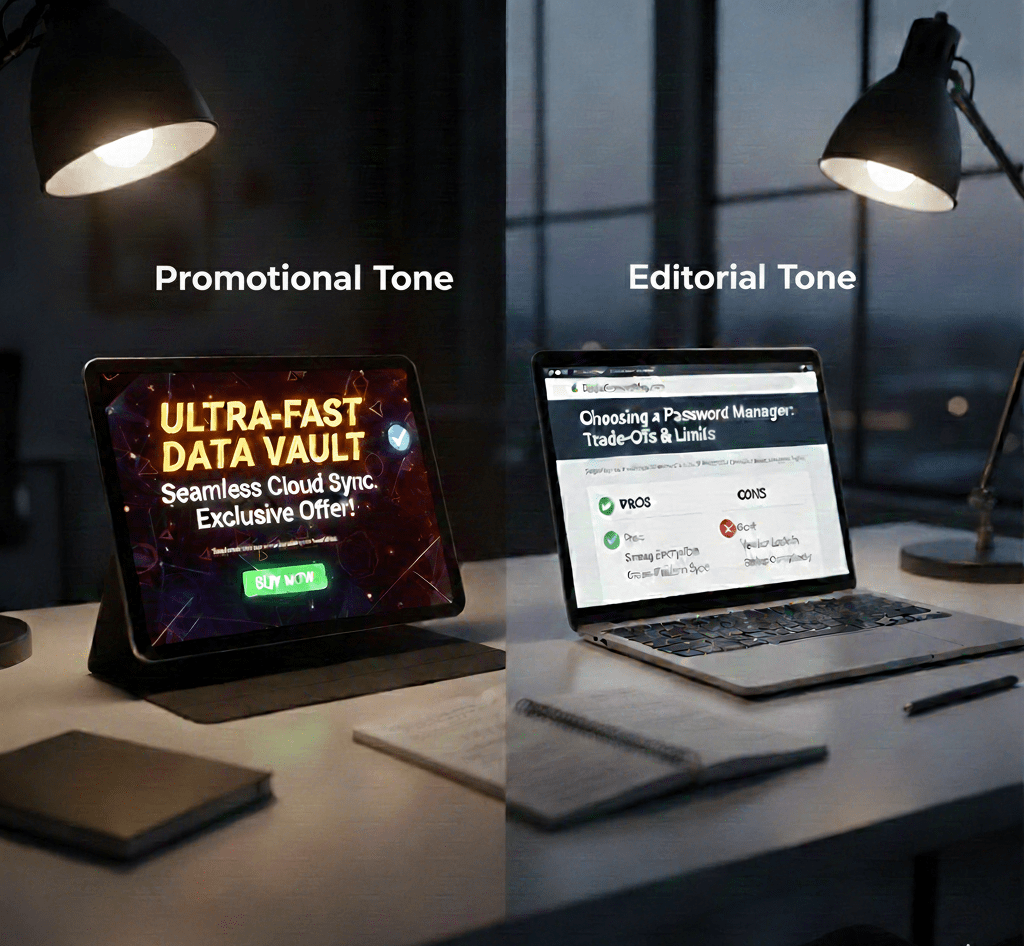
Promotional tone vs editorial tone: what it looks like in practice
There’s a difference between “helpful recommendation” and “sales copy dressed as a guide.” DigitalConnectMag, like many sites, can contain both kinds of writing depending on the post.
Editorial tone tends to sound like someone trying to reduce confusion. It talks about tradeoffs and limits. It names what a tool does well and what it does poorly. It avoids perfect claims.
Promotional tone tends to feel one-directional. One product is framed as the answer. Downsides are missing or softened. Comparisons feel shallow.
Neither tone is automatically “bad.” Promotional writing can still contain useful facts. The point is to recognize what you’re reading so you don’t treat persuasion as neutral guidance.
Safety habits for readers: fake downloads, lookalike domains, and random redirects
A practical warning belongs in any guide that mentions popular site names. Well-known domains attract lookalikes. Scammers mimic layouts. Some redirects push fake “security” installers or browser add-ons.
If you arrive on a page through a strange redirect, pause before clicking anything that asks for downloads, sign-ins, or extensions. If a page pressures you with urgency, treat it as suspicious. If a download prompt appears while you were just trying to read an article, that mismatch is a signal to step back.
This isn’t an accusation about DigitalConnectMag. It’s a reality of how copycats work around names that get searched often.
How to find what you want on DigitalConnectMag without wasting time
DigitalConnectMag has a lot of posts, and the front page view is not always the fastest way to reach a specific topic. Many readers scroll when they really want one answer.
A better approach is simple. Use the site’s own search for the exact term you care about. If the topic is broad, try two versions of the same query. “Password manager” and “passwords” may surface different posts. “VPN” and “Tor” may lead you into different clusters.
If you prefer Google, the “site:” operator can help you isolate results, which is why searches like site http www.digitalconnectmag.com rocket55 show up. That kind of query is usually someone trying to locate a specific mention or a strange-looking result they saw in search. Those results can be tag pages, crawl artifacts, or older URLs that still appear in indexing.
Dates matter as well. Tech changes quickly: tools change names, pricing changes, privacy features shift, browsers update behavior. If a post is older, treat it as background reading and verify current details before you act.

Where DigitalConnectMag sits among other tech and market sites
DigitalConnectMag lives in a crowded space. Many sites cover gadgets, apps, marketing tips, workplace reading, and market talk. The difference is usually in focus and depth.
Some sites dedicate themselves to product testing and review methodology. Some specialize in startup culture and founder interviews. Some focus on finance headlines with short update posts. Some are marketing-only publications with sharper tactical depth.
DigitalConnectMag tends to sit in the middle: broad coverage, accessible writing, and an archive that touches many topics. That makes it useful for discovery. When you reach a high-stakes decision—security choices, expensive purchases, money moves—cross-reading becomes part of responsible reading.
Guest writing and “write for us” pages: what it usually means
Across the web, many magazines accept outside contributions. “Write for us tech” pages exist because guest posts are a common model. This can bring fresh viewpoints. It can bring promotional writing too.
If DigitalConnectMag accepts guest writing, the healthiest reader mindset stays the same: treat each post as a standalone piece. Judge it by clarity, balance, and specificity. If a post reads like it was written to rank or to sell, you can still extract the useful parts and ignore the pressure.
If you are a writer, guest systems usually have rules on originality, tone, and link behavior. Strong magazines reject copy-paste content and thin promotional drafts. Weak magazines let low-effort content slide. You can often feel the difference by reading a handful of posts across categories.
What this guide site does differently
This site exists for readers who want context around DigitalConnectMag and similar publications. The focus is not gossip and not conspiracy. The focus is reading clarity.
We look at the topics that recur, the style patterns that repeat, and the way mixed-topic magazines blend tech, work, and market content. Then we write guides that help readers understand what they are looking at, how to compare sources, and how to read with a steady mindset.
That kind of companion content helps readers who search the brand name first and ask questions later.
Wrap-up
DigitalConnectMag is a broad online magazine that blends tech, privacy topics, marketing posts, business themes, and some finance or crypto coverage. It’s useful when you want quick explanations, light decision guidance, and a wide archive to browse.
The smartest way to use it is straightforward: treat it like one magazine in a wider reading diet. Read for clarity and orientation. Watch for promotional tone when products or money topics show up. Keep a cautious eye on lookalike domains and strange download prompts that can ride alongside popular names on the web. When a decision carries real cost or risk, cross-reading is part of good judgment.